


By Adam Erace
The whiskey-soaked, raisin-studded, more Italian characters than you can shake a stick at, real deal story of Panettone.
Once upon a time, there was a noble Milanese falcon trainer named Ughetto, who fell in love with Adalgisa, the daughter of the town baker. It pained Ughetto to see his crush working so hard at the struggling bakery, so he posed as a peasant and offered to work there for free so she didn’t have to. He got the idea to boost business at the bakery by enriching its breads with butter and sugar and eggs—luxuries in 15th-century Milan, even for a nobleman. So Ughetto sold some of his birds to buy the ingredients, blended them into a cake-like bread studded with raisins and candied citrus, saved the bakery, and took Adalgisa’s hand in marriage.
This is the origin story of panettone, the famous fruitcake that went on to conquer Christmas in Italy and later, America. Except… ‘ughett’ means ‘raisin’ in the Milanese dialect, which is just a little too convenient, isn’t it? Perhaps then another tale is true, that of Toni, a scullery cook in the Duke of Milan’s court. When Toni’s boss burned the cake intended for Il Duce’s holiday feast, Toni took the sourdough starter he was saving for his own Christmas dinner, kneaded it into a rich confection, and saved the day. The Duke named the bread pan de Toni, which eventually became panettone.
Truth is, the history of panettone is unknown, and which myth you hear depends on whose Italian grandmother you ask. I never thought to ask either of mine, even though panettones were never not in their South Philadelphia row homes around the holidays. Panettones would huddle in china cabinets and under Christmas trees, serving as back-ups and emergency gifts for a third cousin or random neighbor. The cakes looked like presents with their ribbon handles, exotic names, and colorful boxes: candy-apple-red Baloccos, toothpaste-blue Melegattis, Peruginas embossed with reflective gold lettering—if things were getting really baller. One panettone would always be sitting out on the table, too, opened and half sliced, something for company to pick at. It usually tasted like cardboard and Pledge, not so different from its less extravagant but equally spurned cousin, fruitcake.
Marc Vetri, an authority on Italian cooking and owner of eight restaurants in Philadelphia, is 20 years my senior but shares the same memory of panettone: “There was just always one there, always the same dried-out, store-bought panettone. Nobody ever loved it, but we always ate it.”
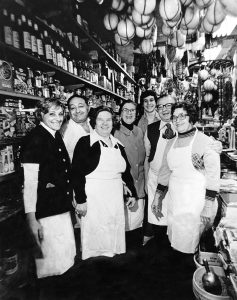
This isn’t necessarily the case in Italy. Unlike the panettones imported to the States, even the supermarket brands in the motherland tend to have finesse and panache. And then there are the freshly baked loaves from neighborhood pastry shops like the award-winning Pasticceria Veneto in the town of Brescia outside Milan, where Iginio Massari crafts a sourdough panettone that has been called “exuberant and voluptuous” by the Gambero Rosso guide and is widely considered Italy’s best.
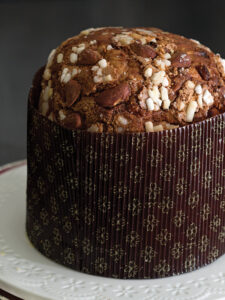
In America, chefs are making pilgrimages to grain labs and installing miniature mills in their kitchens, while bakers refine familiar staples like bagels and rye and introduce new favorites like kouign-amann. Temperamental and time-consuming, panettone fits perfectly within the larger artisan bread movement, and an increasing-every-Christmas cadre of cooks is tackling the challenge. James Beard Rising Star nominee Alex Bois of New York’s High Street on Hudson, bakes loaves studded with brandied cherries and scented with jasmine. Jillian Bartolome leavens hers with an Italian levain starter at Common Bond in Houston; both the traditional and chocolate versions—the latter is ribboned with caramelized hazelnut praline—will sell out in hours.
At Vetri Ristorante, Marc Vetri stuffs a cotton-candy-textured panettone with gelato and slices it tableside. His recipe comes from a friend’s osteria in Bergamo in Northern Italy, but the style harkens to Sicily, where locals eat their gelato stuffed in brioche rolls. Sicily is also where you’ll find panettone baked with a ring of oro verde pistachio cream inside. The ‘green gold’ is one of the regional twists you’ll find on panettone all across Italy. Here’s hoping Americans follow suit. Can you imagine: cherry panettone in Michigan, mango in Miami? Maybe not traditional, but definitely delicious.
WHERE TO BUY
Zingerman’s | The Ann Arbor deli-cum-specialty foods juggernaut begins importing three varieties of panettone (classic, chocolate-fig, and balsamic-swirled) from Italy this October.
DiBruno Bros. | The “Private Collection” Panettone from this Philadelphia-based family of specialty stores is baked at Pan Ducale bakery in Abruzzo, Italy.
Gustiamo | This Italian food retailer sources its panettone from Pasticceria Biasetto in Padova, where chef Luigi Biasetto crafts his bread with organic eggs, Sicilian citron, honey from the Italian Alps, and a 60-year-old sourdough starter.
Emporio Rulli | The panettones at Gary and Jeannie Rulli’s Bay Area-based shops and eateries are favorites of Giada DeLaurentiis and Martha Stewart.
DiCamillo | In business since 1920, this New York State bakery ships a hazelnut-and-almond-iced Piedmontese panettone all around the country.
Bake your own Panettone at home with our recipe.

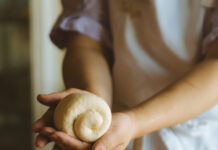


I have been searching for recipes for panettone. I read yours and was ready to try a loaf before holiday baking kicks off. I’ve stockpiled the paper forms, and I am looking for the dowels to hang the loaves. I am planning to make room in my tiny fridge for my bread bowl. For motivation, I read your article about the origins of panettone, and it stopped me dead. Before I go to all this effort, tell me true. Will it taste like cardboard and Pledge like the panettones of your childhood? Is this recipe better than your Mom’s? I assume from the article that storage and shelf life had something to do with the cardboard part of your description. Please expand on how long I can expect optimal taste and how to store loaves for maximum freshness.
Hi Kim,
Thank you for reaching out. In general, making something yourself is going to be better and fresher than buying it. By the time the store-bought loaves make it to the shelves, it’s already been weeks since it’s been baked.
That being said, Pannetone is meant to last a while. So it’ll be best in the first week or two after you’ve made it, but should still taste good after a month. Wrapping it in plastic wrap or storing it in an airtight container will ensure freshness. Hope this helps and happy baking!